News
Some Observations . . .
Jun 07, 2020
 . . . On the occasion of the end of my 12th week in stir.
Just now we are in the midst of daily and nightly protests against police brutality, bringing millions of Americans (and others supporting us overseas) outside in large groups in the midst of a pandemic. Already, infections among demonstrators are on the rise. I guess we really mean it this time.
I don’t believe the roots of racism have anything to do with hating African-Americans, or even of feeling superior to or despising them. The truth, I believe, is that white folks in America are terrified of black Americans, and well they should be, considering how we have treated them for the past 401 years. And because the police come in closer contact with African-Americans than the rest of us, either intentionally or otherwise, their overreaction to the terror they feel is on display practically every day in this age of ubiquitous video cameras.
It is an axiom of war that you shouldn’t leave your enemy wounded on the field. Either nurse their wounds and find ways rehabilitate them, or, if that is not a viable option, finish them off. Lincoln sought to do the former when he posed the possibility of sending the liberated slaves to Africa or Central America. Black leaders vehemently opposed this idea, and I like to think if Lincoln had lived through his second term, his viewpoint would have continued evolving and maturing, and he would have led us into a post-war era very different from the one that came about without him.
However, back to today.
We have neither bound up the wounds of our African-American brothers and sisters, nor finished them off. Indeed, we have continued to wound them long after the great wound of slavery has receded into the distant past. And knowing this, in our heart of hearts, renders us terrified of the possibility of justice ever arriving for the black man and woman.
Is our terror justified? Absolutely not. Again in my view, the sons and daughters of slavery are among the gentlest, most pacific peoples on earth. I can tell you that as a privileged old white man, had I been talked "the talk" on the occasion of my coming into manhood, I would have long since died in the mountains somewhere, waging total war on the bastards who were doing this to me and my race. And yet, with scarcely any violence against their white oppressors, black men and women have not only endured the slings and arrows of a terrified ruling class, they have prevailed over their oppressors to become some of the most revered and accomplished people in our history.
So stop being frightened of our black brothers and sisters. They are not exacting a just revenge. Their anguish and anger are given expression almost entirely within their own communities. And against the day when they could indeed rise up, as I would, to smite the oppressor, let us set about binding their wounds, acknowledging our shared humanity, and welcoming them into our family, many of whom are descended from Americans who were here long before our white ancestors saw these shores.
Hail and Farewell
Jun 10, 2018
 I met a producer who worked for 60 Minutes at a high school graduation party yesterday. I found a moment to castigate him for what his program did to Greg Mortenson. He said they were intending to do a very complimentary piece about Mortenson before all that terrible stuff came out about him. I left it at that and spent the ride home thinking of what I should have said to him.
Go back to Casanova’s memoirs and examine every memoir written since then, and you will find errors, omissions, exaggerations, telescoped incidents, invented dialog, and all manner of “fictions” in every one of them, without exception.
Jon Krakauer, author of Into the Wild and Into Thin Air, tales of other people’s bravery gone wrong, and the most vociferous accuser of Mortenson’s literary missteps, may very well be consumed by envy for the success of Mortenson’s book, and, more importantly, his life. Krakauer has not, to my knowledge, done anything to benefit anyone besides Jon Krakauer. Mortenson’s life work creating schools, educating girls, creating infrastructure, and training teachers, all in the most dangerous and poorly functioning countries on earth, makes him perhaps the greatest hero of our time.
I said that ten years ago, when I started All Together Now, and awarded Mortenson the blog’s first Golden A for Achievement, and I say it again today. Since the death of Martin Luther King, I can think of no one who has given the world more of themselves to better purpose and greater effect than Greg Mortenson.
So, ending as I began, I hail a great individual, one whose message and whose efforts, properly understood and appreciated, could, would, and should bring us all together now.
Out on a Limb
Apr 17, 2017
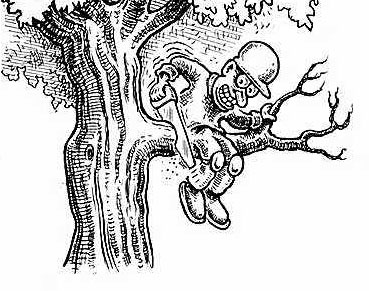 In the wake of last week’s Republican win in Kansas, and in anticipation of this week's special election in Georgia, I'll go out on a limb and make a couple of predictions.
First, mid-term elections usually see significant gains made by the party not in the White House. I predict the 2018 midterms will see relatively few gains, if any, by the Democrats, and they will regain control of neither the House nor the Senate. They may even lose ground.
Second, twenty-five states currently enjoy Republican "trifectas," which means one party controls the house, senate, and governor's office. There are only six Democratic trifectas. I further predict these numbers will not change significantly (more than plus or minus 10%) in the 2018 midterms, and for the same reasons.
Why? For starters, the nation is so full of angry, poorly educated voters, who are so economically desperate and so easily manipulated by the massive infusions of money into the political process since Citizen's United that they voted a hugely unqualified candidate into the most powerful position in the world. Nothing the Democrats have done or are planning to do (so far as they have let any of us in on their plans to date) will address the anger, the education level, or the economic stressors afflicting those voters between now and November 2018. And billions will be poured into the midterms by the Mercers, the Kochs, and their ilk to retain the advantage of the Republican majority now held in all three federal branches.
So where is the Big Democratic Idea that will address the economic desperation of the 63 million who voted for Trump? Their numbers will only grow in the next two years, under the care and feeding of the Republicans. We may expect the party of Lincoln to dismantle labor and environmental protections; increase economic stressors on the poor and middle class in order to swell the wealth of the one percenters; and in general further diminish our American quality of life (US News currently ranks us #18). Nothing resembling business as usual will appeal to those disaffected voters. They will turn again to anything that looks like it will shake up the status quo in a do-or-die attempt to improve their situations. If they could make the suicidal move of supporting Trump in 2016, they will do it again in 2018—unless they have a clear and persuasive reason not to.
There is no going back to the country we all knew before last November. We don't yet know the extent to which it has changed or will change in the coming years; however, we know those changes will not be favorable to the general populace or to the future of our species. The stranglehold of the corporatocracy and the plutocrats who run it is now complete, and the mischief they may do while the new status quo obtains is incalculable.
Neither is there any going forward via the old business model. We either fix our problems or watch as they metastasize to the point where they engulf us all, and all the world along with us.
Einstein and Me
Dec 06, 2015
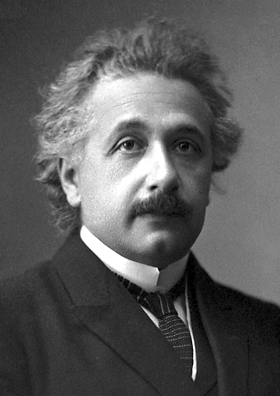 It’s gratifying when you find a genius who agrees with you. Here’s what Einstein once said:
Strange is our situation here on Earth. Each of us comes for a short visit, not knowing why, yet sometimes seeming to divine a purpose. From the standpoint of daily life, however, there is one thing we do know: that man is here for the sake of other men—above all for those upon whose smiles and well-being our own happiness depends.
Einstein doesn’t just mean you need to keep your boss happy. If, for instance, your fellow citizens are ill-housed, un- or underemployed, impoverished, unhealthy, and uneducated, you can bet your life your happiness will be diminished if not ultimately destroyed.
Your happiness is diminished when your paycheck is plundered to provide a niggardly subsistence to those unable to provide for themselves. This includes the three million people who earn at or below the minimum wage (Source: Bureau of Labor Statistics), not to mention the millions more who earn less than a living wage.
The current federal minimum wage ($7.25/hour since July 2009) is considerably less than half a living wage by most accounts (see, e.g., the living wage calculators at MIT and the Economic Policy Institute).
Your happiness is diminished by the increase in all sorts of crime and corruption that thrive in times when the absence of “smiles and well-being” is so apparent among so many. We are living in an angry world, where in the U.S. a mass shooting happens on average more than once a day; where millions risk death to flee places that should be considered their home and sanctuary; where existence is threatened for other millions by rising ocean levels and capricious weather patterns; where a vicious fundamentalism has replaced strong-man tyrannies and spread its venom throughout the world.
Your happiness is diminished by the cost of dealing with all this unhappiness, in domestic surveillance, enforcement, and imprisonment; and in international conflicts that siphon trillions from our treasury.
In Darwinian terms, ensuring the other guy’s “smiles and well-being” is a survival mechanism, not some feel-good, altruistic effort, and this is Einstein’s point: Our survival depends on the other person’s survival; our happiness on their happiness.
No candidate for president has proposed policies or programs that are not, finally and essentially, business as usual, or worse, or much worse. No candidate has proclaimed that we must rewrite our social contract with ourselves, to acknowledge the truth of Einstein’s observation and to pursue its goals with dispatch. Not even Bernie.
And for that reason, I despair of the short-term future for our nation, and of the long-term future for our planet.
My January Rant
Jan 31, 2013
 Lest a month go by in my neglected blog without an entry, allow these few rants on its last day:
- I've been assiduously at work on bookaworld, making contact with Ethiopian writers and booksellers, and working on the Ethiopian/English volume of Aesop's Fables. I cannot say the same for the IRS which has sat on our application for 501c3 status for over four months. A recent phone call to them resulted in my learning they think there is something wrong with my meticulously prepared application. They won't tell me what. They won't even tell me when they will tell me what, though it looks like it will be around the end of the year! I'd ask for my $400 back, but you know where that would get me.
- Guns. Don't look for substantive changes in gun laws. The Supreme Court has held that the second amendment guarantees individuals the right to own military weaponry. And it will take a constitutional amendment or a new and very different Supreme Court before that changes. And is it my imagination, or am I reading about a fatal shooting just about every day now?
- Syria. Bashar al-Assad has now killed upwards of 60,000 of his own people, making his old man, at a measly 25K or so, look like a wuss. There is a little doctrine called the Responsibility to Protect that frowns on a nation slaughtering its own, and calls upon the international community to do something about it. Is anyone listening?
- The Economy. A very good friend lost his job this week. Don't be fooled by the current bull market. Poverty is increasing. The middle class has shrunk to an all-time (that's ALL-TIME) low. The wealth gap is growing, with most of us stretched thin while a very few enjoy wealth that would embarrass Louis XVI. I say, let the ridiculous sports figures, Hollywood stars and, yes, even the hedge fund managers make their quadrillions a year, if they can get away with it. But there is no excuse for any American to be without the guarantee of a job at a living wage.
- Education, etc. Where to start? When I think of the American lives that we are wasting, when I think of the world's lives that we are wasting (as many as 18 million people, mostly children, die of hunger every year), when I think of all the brain power that goes to waste through preventable wars, hunger, disease, meteorological disasters, and lack of education. This world could be a paradise, if we only saw to the basic needs of one another—clean water, sanitation, nutrition, an education, and a job that pays the bills. Is that so much to ask? Does anyone doubt there is enough to go around?
Gore Vidal, Prophet
Aug 29, 2012
 Gore Vidal has joined the company of Martin Luther King and Howard Zinn. Another of my heroes is gone; I can’t think of any I have left now.
No one spoke truth to power with the humor, the eloquence, the urgency, the contempt, the rage—or the prescience—of Gore Vidal, and we suffer grievously without his voice.
I just finished his Collected Essays, 1952-1972. These few outtakes should impress you as much as they did me with his gifts of wit and prophecy. Long before we were what we are and had found the voice in which many of us are speaking today—before Vietnam, before Watergate, before Reagan—he was one of us, showing the way:
Here he is discussing the causes for the decline in the reading of novels, a plaint heard over and over in this collection:
“Nevertheless, appalling education combined with clever new toys has distracted that large public which found pleasure in prose fictions.”One of his most famous assertions, spoken not altogether with tongue in cheek, is one to which I have often related while composing the nostrums that litter this blog:
“A Note on the Novel,” New York Times Book Review, August 5, 1956.
“I am at heart a propagandist, a tremendous hater, a tiresome nag, complacently positive that there is no human problem which could not be solved if people would simply do as I advise.”Vidal was master of the Parthian shot, a final little twist of the knife at the conclusion of an already damning progression of put-downs. Having misspent several years, off and on, in the theatre, I can attest to the truth of this one.
“Writing Plays for Television,” New World Writing #10, 1956.
“After the script was ready [for his Broadway play Visit to a Small Planet] there were the usual trials, delays, problems of temperament; each participant convinced that the others had gone into secret league to contrive his professional ruin (and on occasion cabals did flourish, for the theater is a child’s world).”We finally “got it” in the Great Recession; Vidal got it almost 50 years ago:
“Visit to a Small Planet,” The Reporter, July 11, 1957.
“In public services [as a portion of our foreign aid], we lag behind all the industrialized nations of the West, preferring that the public money go not to the people but to big business. The result is a unique society in which we have free enterprise for the poor and socialism for the rich.”The futility of reversing a status quo that is destroying our country, the world, and the hopes of future generations was expressed succinctly by Vidal a few short years after Eisenhower’s famous warning regarding the military-industrial complex:
“Edmund Wilson, Tax Dodger,” Book Week, November 3, 1963.
“Between the pork barrel and the terrible swift sword, Pentagon, Congress, and industry are locked together, and nothing short of a major popular revolt can shatter their embrace.”Vidal captures the essential lunacy—and tragedy—of the impulse toward religion and religious fundamentalism:
“Edmund Wilson, Tax Dodger,” Book Week, November 3, 1963.
“And those who take solemnly the words of other men as absolutes are, in the deepest sense, maiming their own sensibilities and controverting the evidence of their own senses in a fashion which may be comforting to a terrified man but disastrous for an artist.”Attending Eleanor Roosevelt’s funeral, he makes this final observation:
“Norman Mailer’s Self-Advertisements,” The Nation, January 2, 1970.
“As the box containing her went past me, I thought, well, that’s that. We’re really on our own now.”And so we are.
“Eleanor Roosevelt,” The New York Review of Books, Nov 18, 1971 (p. 424)
The last word, in another election year we find ourselves anticipating with dread:
“Persuading the people to vote against their best interest has been the awesome genius of the American political elite from the beginning.”
“Homage to Daniel Shays,” The New York Review of Books, August 10, 1972.
Lifting the Veil
Apr 12, 2011
 There has been much debate of late regarding the French ban on the wearing of the Arab niqab (mask) in public. The two sides are well represented in an editorial in Canada’s National Post,1 so I am not going to rehash them here.
However, I will add one comment not mentioned in this editorial or in anything else I have read on this issue. If a government is going to conclude that the wearing of a mask in public is, indeed, a matter for the legal system to deal with, then they should not double down on blaming the victim—which is what the oppressors of these women are doing in the first place—and arrest these hapless females. They should arrest the culpable parties—the husbands, fathers, brothers, and sons of these abused women.
The radical Islamists tell their women, “Get raped and we will stone you to death.” The French tell them, “Wear a burka or naqib and we will put you in a cell and fine you 150 euros.”
Does such an attitude not merely represent a milder form of the same injustice and, ever at the root of this sort of thing, misogyny?
____________________
1 Don’t ban the burka, an editorial from the National Post, Ontario, Canada, Apr 12, 2011, accessed Apr 12, 2011.
The Scamming of America
Nov 07, 2010
 Here is how it works, and it is really quite simple. A true-life example: The federal government reaches into your pocket and extracts three billion dollars. They give it to some other country, on the condition that that country purchase three billion dollars worth of weaponry from American corporations. The lion’s share of the profits from this sale goes into the pockets of a few high-level corporate executives who, in exchange, fund the campaigns of the individuals in the federal government who are empowered to enable this scam.1
Of course, a puny three billion dollar sale is just a drop in the bucket. The real bucks come with endless war. It has been estimated, by a Nobel Prize winning economist, that the war in Iraq will ultimately cause the extraction of three trillion dollars from our pockets—that’s three thousand billion dollars.2 And who can begin to guess what the one in AfPak will cost, now in its tenth year and no end in sight.
And when the Republicans return to power in 2011 and 2013, and begin chipping away at Social Security and Medicare, the last vestiges of the middle class will disappear into a maelstrom of foreclosures, bankruptcies, and suicides.
Both the Tea Party and the Progressive movements in the U.S. are made up of people who believe government has failed them, that the essential responsibility of their elected officials, to provide services and protections necessary to maintain an efficient, safe, and well-functioning society, have been abandoned in favor of the promotion of special interests which are inimical to the interests of society at large.
We live in a corporatocracy and a plutocracy, where fewer and fewer are becoming richer and richer, and we—miserable damn fools that we are—with our iPods and our televisions, fritter away the last days of democracy on Facebook and at the mall.
We need a new American vision, one that puts the people first. And we all need to get behind that vision. Tomorrow, I will flesh out a few details of that vision, as I see it, and I will challenge you to identify the ideology my vision comes from. It is an American vision, composed of the best ideas from left, right, center, the Tea Party, and Progressives. It is a vision that puts the people first, a vision to restore America’s promise to itself and to the world.
Let us hope it is not too late.
____________________
1 Israel Commits to F-35 Purchase, by John Reed, from DefenseNews, October 7, 2010, accessed October 11, 2010.
1 The Three Trillion Dollar War: The True Cost of the Iraq Conflict, by Linda Bilmes and Joseph Stiglitz, on Amazon.com, accessed Oct 11, 2010.
Tiger at the Gates
Jul 25, 2009
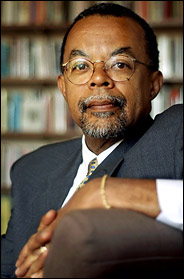 The Henry Louis Gates encounter with the Cambridge police has been much in the news of late, even prompting the president to put in his two cents’ worth (and his foot in his mouth). I have read much on the issue, from various points of view, in an attempt to understand my own attitude toward the encounter, the significance of which, of course, goes well beyond the incident itself.
The legacy of race relations in the U.S. is the cross we all bear as Americans. Slavery was a crime against humanity as foul as any save genocide and was, indeed, a kind of genocide. The plight of the colored races in this country, since black Americans were freed in 1863, has been scarcely better than slavery and, in some locales and periods, arguably worse.
The fact that America today can elect a black president is cause for enormous pride and celebration. Without minimizing this, however, we must acknowledge that racism still smolders in our hearts, and its effects are still a plague upon a huge contingent of our people. No black person in America lives what any white person would recognize as a “normal life.” They never enter society unaccompanied by some level of fear and apprehension. They have not a moment’s waking peace, and their dreams are troubled by the residue of generations of intense cruelty and injustice.
Into this mix arrives a routine police response to an alleged breaking and entering, ending with the arrest in his own home of one of America's most respected intellectuals. An insufficient I.D., persistent outrage, an unfortunate “clash of egos”—whatever the putative cause of Gates’s short-lived arrest, a simple fact, I believe, remains indisputable: Gates’s anger provoked anger in the policeman, and a policeman in the course of his duties must not allow himself to become angry. Such a debilitating emotional response must be trained out of recruits, or they should not be allowed to serve. You may argue that a policeman’s day consists of scores of provocative encounters with angry and dangerous elements. All the more reason why an appropriate professional response must not include an emotion which interferes with an appropriate professional response.
____________________
1 Obama Expresses His Regrets on Gates Incident, by Jeff Zeleny, the New York Times, Jul 24, 2009, accessed Jul 25, 2009.
A Pun My Word!
Feb 14, 2009
 Yesterday’s entry was such a downer, we thought we would pass along a funny email we received from a friend today (Hi, Jan!). It is, after all, Valentine’s Day and as someone once said, laughter is the shortest distance between two people.
Pun Intended
- Two antennas met on a roof, fell in love and got married. The ceremony wasn’t much, but the reception was excellent.
- A jumper cable walks into a bar. The bartender says, “I’ll serve you, but don’t start anything.”
- Two peanuts walk into a bar, and one was a salted.
- A dyslexic man walks into a bra.
- A man walks into a bar with a slab of asphalt under his arm and says: “A beer please, and one for the road.”
- Two cannibals are eating a clown. One says to the other: “Does this taste funny to you?”
- “Doc, I can’t stop singing ‘The Green, Green Grass of Home.’” “That sounds like Tom Jones Syndrome.” “Is it common?” “Well, It’s Not Unusual.”
- Two cows are standing next to each other in a field. Daisy says to Dolly, “I was artificially inseminated this morning.” “I don’t believe you,” says Dolly. “It’s true, no bull!” exclaims Daisy.
- An invisible man marries an invisible woman. The kids were nothing to look at.
- DejaMoo: The feeling that you’ve heard this bull before.
- I went to buy some camouflage trousers the other day but I couldn’t find any.
- A man woke up in a hospital after a serious accident. He shouted, “Doctor, doctor, I can’t feel my legs!” The doctor replied, “I know you can’t - I’ve cut off your arms!”
- I went to a seafood disco last week... and pulled a mussel.
- What do you call a fish with no eyes? A fsh.
- Two fish swim into a concrete wall. The one turns to the other and says “Dam!”
- Two Eskimos sitting in a kayak were chilly, so they lit a fire in the craft. Unsurprisingly it sank, proving once again that you can’t have your kayak and heat it too.
- A group of chess enthusiasts checked into a hotel and were standing in the lobby discussing their recent tournament victories. After about an hour, the manager came out of the office and asked them to disperse. “But why,” they asked, as they moved off. “Because”, he said, “I can’t stand chess-nuts boasting in an open foyer.”
- A woman has twins and gives them up for adoption. One of them goes to a family in Egypt and is named “Ahmal.” The other goes to a family in Spain; they name him “Juan.” Years later; Juan sends a picture of himself to his birth mother. Upon receiving the picture, she tells her husband that she wishes she also had a picture of Ahmal. Her husband responds, “They’re twins! If you’ve seen Juan, you’ve seen Ahmal.”
- Mahatma Gandhi, as you know, walked barefoot most of the time, which produced an impressive set of calluses on his feet. He also ate very little which made him rather frail and with his odd diet, he suffered from bad breath. This made him (oh, man, this is so bad, it’s good)..... A super calloused fragile mystic hexed by halitosis.
- And finally, there was the person who sent twenty different puns to his friends, with the hope that at least ten of the puns would make them laugh.
No pun in ten did.
An Open Letter
Feb 09, 2009
 To: The Vermont State Legislature
Friends,
At a time of great and growing crisis, when we should be hanging together and helping one another, when an opportunity has been presented to advance the progressive goals of the Democratic and Progressive parties, and when those parties enjoy an overwhelming majority in both houses of the state legislature, we are greatly disappointed at your silence, and your timid acquiescence in the mean-spirited and bankrupt policies of our Republican governor. There are many ways we can support full employment in Vermont. There are many avenues to generating more revenue, and not in a burdensome manner to our residents. These are the times when government should expand its presence, open its doors to the people, and not cut them off and bury its head in the sand.
We must speak the truth. The Republican one-note obsession with cutting taxes is not only a failed policy, it is an evil one, designed for a single purpose: to transfer wealth to a few at the top while impoverishing the rest of us.
Vermont is perhaps the best situated of any state to show the nation that we can confront the challenges we face today and conquer them: that no Vermonter will go hungry or be forced from their home in hard times; that work will be found for any man or woman in need of it; that we will redouble our efforts to improve education, understanding that it is the key to our healthy future, and we will resist the calls to lay off teachers, close schools, and freeze local budgets; that if the nation cannot fashion a sensible universal health care program, then we will find a way to do so, as we found a way to insure our children.
This is a proper response to hard times. It is a brave response, and it is the response we expect from the Democratic and Progressive leaders we elected. You must stop colluding in the cynical exploitation of a crisis which is the knee-jerk reaction of the right. Times are good? Cut taxes! Times are bad? Cut taxes! This wicked mantra should have been thoroughly debunked by now. It threatens to turn our cherished nation into a banana republic.
So pull up your socks and get to work. The people of Vermont are ready to weather this storm, and together we stand. It’s time our representatives stood with us.
Euros and Euro Happiness
Dec 11, 2008
 What do you know? The European Union actually cares about the quality of life of all its people, and not just the enrichment of a tiny few at the expense of the rest. Eurofound, the European Foundation for the Improvement of Living and Working Conditions, was founded in 1975 “to contribute to the planning and design of better living and working conditions in Europe.” Eurofound researches these conditions across the 27 European Union countries (including three current candidate countries), tries to identify what works, and passes along that understanding to labor, employers, and governments.
Their Second European Quality of Life Survey (.pdf, 416Kb) has just released its first findings. The full report will be available in spring 2009. The survey sought data on general life satisfaction and happiness relating to family, work, and social life. Among interesting findings we may wish to take to heart:
- Earning disparities are lowest in the countries that show the highest general satisfaction and happiness.
- The country with the highest household income (Luxembourg, with over twice the average EU income), comes in sixth out of 27 on the scale of general satisfaction/happiness.
- The country with the highest general satisfaction/happiness (Denmark) comes in ninth in household income.
The happier populations are in countries, primarily in Scandinavia, where government of, by, and for the people is working. They should be models we seek to emulate in the hard times to come.
...And Pulled Out a Plum
Nov 21, 2008
 Speaking of transparency in government (which we were speaking of only yesterday in The See-Through Government), the Government Printing Office provides a great online resource containing way more information than you will ever need on who’s who in appointed (non-competitive) positions in the Executive and Legislative branches and various independent agencies of the federal government—the “plums,” in other words.
As we noted a few days ago, in Your Tax Dollars At Work, there are over 2.7 million federal employees. Many of them are civil servants in competitive positions, of course, but this resource is useful in finding out who is really running things, or disrupting them every four years, depending on your point of view.
Pay codes are noted, and you can check the 2009 Government Pay Schedule for help in decoding them. Bookmark for future reference. Also of great value is The Prune Book, which contains detailed job descriptions of agency heads and major subordinates.
Now, let’s see if Obama includes email addresses in the next edition.
What Matters?
Oct 16, 2008
 A wise fellow once said, “Life is half over before we know what it is.” Unless we live to be 126, our life is probably something more than half over, and past time for a moment’s reflection. In our view, life’s essential question is, “What matters?” It is a question one can only answer for oneself.
So what matters for us? We would say:
- Freedom to do as we please, and four healthy limbs and the education to enable us to do it.
- Engaging and challenging work that we can drop for something else when it ceases to be one or the other.
- Love: The incomparable miracle.
- The capacity to enjoy a New England autumn, a good book, a good meal, a pretty melody, a pretty picture.
- The understanding that the quality of our life is dependent on the quality of all other life on the planet, and the energy and the perseverance to inhabit that understanding with action.
- The urge to delight, and the capacity to be delighted.
Copyright © 2008 All Together Now.